
Skip to content

    See what one match teaches you

    This is a real Kitch IQ report, minus the one card noted below it, from a doubles match: 10 minutes of video analyzed from an upload 18:47 long. It shows where the player stood, the pattern that stood out, and the one drill to practice next. Read it, then decide if you want one for your game.

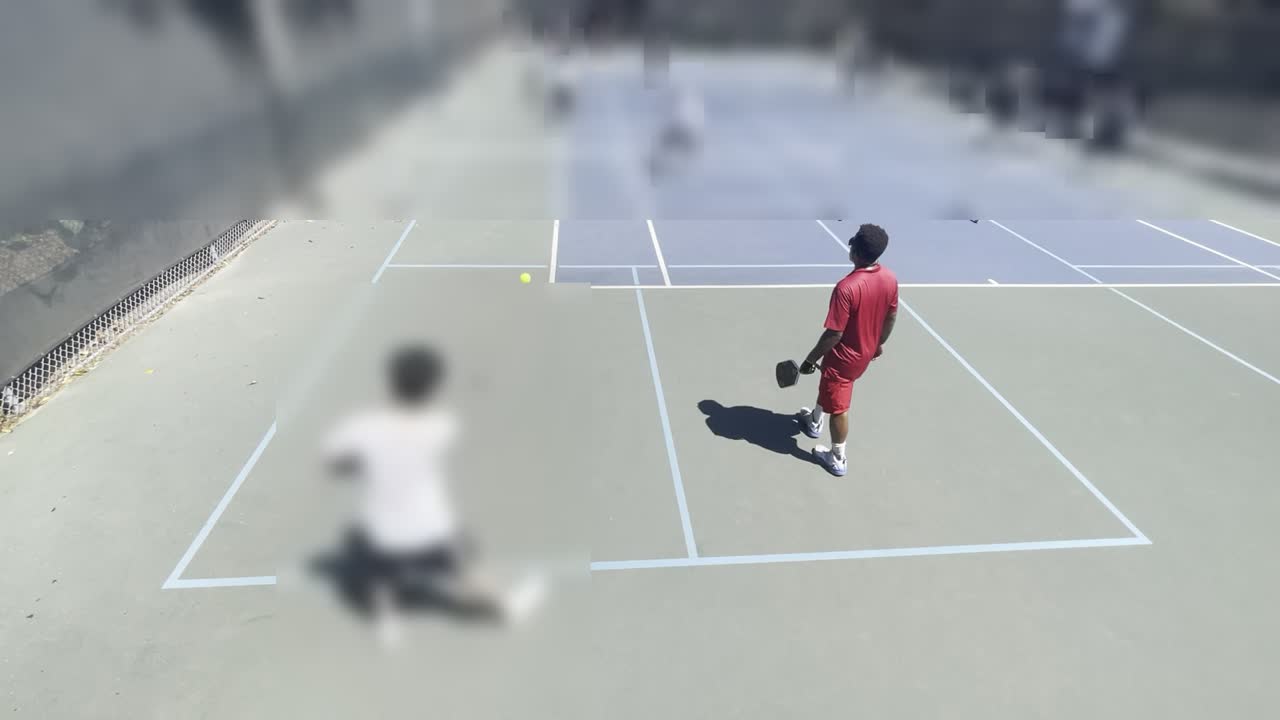
    The analyzed player in a red shirt on the near court, filmed from behind the baseline; every other person in the frame is blurred.

    A frame from the match at 11:56 in the uploaded video, inside the stretch analyzed (8:56 to 18:47): phone on the fence behind the baseline. Every other person is blurred.

    NetKitchenKitchenBaselineBaselineOpponentYour side

    Where the analyzed player stood, across the stretch analyzed.

    This sample was processed on September 22, 2026, from that upload. Re-running the same video through a newer analysis version can shift a score like this one slightly.

    In this report
    Single report

    Match session — 10 minutes of video

    Everything below is about you — the near-side player.

    Your focus: getting to the line

    Most of your court time was back at the baseline.

    Getting forward to the line is your biggest gain.

    58%
    of your tracked court time at the baseline

    This is the figure that sentence rests on.

    18 rallies played · 10 minutes of video analyzed

    Romy, the Kitch IQ coach

    This week, one thing: get to the line and stay there. Only 27% of your court time was in the front court (within 10 ft of the net), and the front court is where points are usually decided. Do this drill — Return-and-run ladder, Week 1 of your plan.

    Follow your own shot forward until you can see over the net rather than up at it.

    When your return leaves the paddle, run in before you find out where it lands, and stop at the line; when you serve, come in behind your third shot.

    Your next report opens with this number (time in the front court) beside today's when the video gives a clean read, so you can see whether it moved.

    In the front court

    Where you stood

    Front court
    27%
    Transition
    15%
    Baseline
    58%

    These figures cover 9 minutes of the 10 minutes of video analyzed — the stretch where your court position was tracked cleanly.

    Measured as where you stood, not as how your dinks played: the share of your tracked court time in the front court (within 10 ft of the net).

    Coach's read

    Here's my read on your session (10 min of video analyzed).

    Your focus: getting to the line
    Jump to your 4-week practice plan →

    Your style

    At least two of every three swings we measured were soft ones. That's the shot to come in behind: after a soft one, move up while the ball is still in the air.

    Court coverage score

    out of 10
    6.3
    / 10
    Counts only your time forward of the baseline

    This score is a position share, not a skill rating. Of the active-play time we tracked you forward of the baseline, it is the share you spent in the front court (within 10 ft of the net) rather than in the mid-court transition zone, on a 0–10 scale. Baseline time is left out of the calculation because everyone starts there. Any rating band shown is our estimate, not a measured norm.

    • 0–4: mostly back
    • 4–6: some time forward
    • 6–8: often forward
    • 8–9: mostly forward
    • 9–10: not reachable in play

    A perfect 10 would mean zero transition time — physically not possible in pickleball. It is worked out from your exact time shares, so it can differ by a tenth from the rounded percentages shown. This score leaves your baseline time out, and more of your court time went there than anywhere else — so the bigger gain is still getting forward sooner.

    Tip: camera placement decides how much of your match we can map. See the filming guide → to get even more of your next session tracked.

    Your 4-week practice plan

    Practice plan

    Built from this week's one thing: getting to the line. Four progressive weeks on the same focus.

    1. Week 1

      Return-and-run ladder

      Setup
      Partner feeds a serve; you return deep, then run in and stop with both feet at the kitchen line before their contact.
      Target
      10 returns, counting only the reps that pass the check below.
      Check yourself
      Were both feet set at the line before the ball left their paddle?
    2. Week 2

      2-touch to the line

      Target
      12 feeds, counting only the reps that pass the check below.
    3. Week 3

      2-touch to the line, next step (drop to one touch)

      Target
      12 feeds, counting only the reps that pass the check below.
    4. Week 4

      Match play

      Target
      One full session, counting the points where you used the return-and-run ladder; next session, beat that count.

    Want to track your improvement?

    One match shows your patterns. Each match you upload gets its own report; comparing matches side by side is part of Pro.

    Generated using Google’s Gemini AI model family. AI-generated coaching content can miss things or misread a moment.

    We delete your original video within 8 days of your analysis finishing — usually as soon as it's done. Your report stays available for 90 days, then it's deleted too.

    Rallywise: train this

    Preview

    With Pro or Annual, your report opens a Rallywise round built on your focus: getting to the line.

    Your next report is the real check.

    See Rallywise →

    What a full report adds

    These appear when your video supports them — not every report gets every item.

    • A coachable-moment card: one frame from your video and the one change to make
    • Shot patterns
    • Stroke mix
    • Errors

    Get this report for your own match

    Upload up to 20 minutes of play. Your report usually arrives in about 45 minutes, and we email you when it is ready.

    How to film your match · Back to Kitch IQ